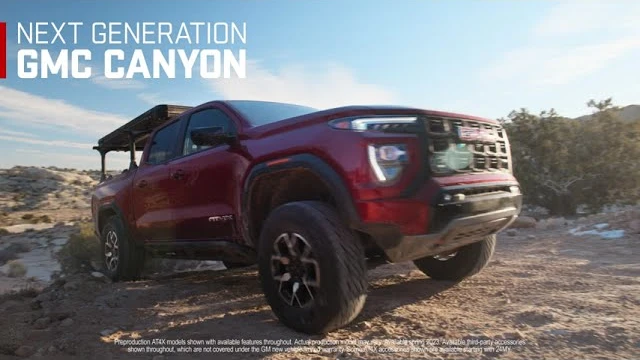
- 2027 GMC Canyon horsepower upgrades may focus on refinement rather than a confirmed engine replacement.
- Turbocharged four-cylinder power remains the expected foundation for the refreshed midsize truck.
- V6 and Duramax possibilities are speculative alternatives, not confirmed production specifications.
- Towing buyers should prioritize final torque, payload, and configuration-specific ratings.
- AT4X shoppers should match any power increase with cooling, traction, and suspension capability.
2027 GMC Canyon horsepower upgrades: Current Outlook
The 2027 GMC Canyon is an automotive product, not a game or fictional universe, so the horsepower discussion centers on engineering, towing, trim selection, and real-world truck use. Current reporting and preview coverage point toward a refreshed Canyon with a stronger focus on powertrain choice. However, confirmed consumer specifications remain limited as of September 2026.
The most important possibility is a higher-output version of GM’s turbocharged four-cylinder strategy. The existing 2.7-liter turbo engine replaced the previous V6 formula and gained a reputation for strong mid-range torque. The main criticism has been limited choice rather than an obvious lack of usable performance.
Video Highlights:
- The refresh is expected to refine the current Canyon rather than completely replace its design.
- A broader engine strategy could give buyers more choice than the current turbo-four setup.
- A V6 return and Duramax diesel revival remain possibilities, not confirmed specifications.
- AT4 and AT4X versions would continue emphasizing off-road capability and suspension hardware.
The preview discusses a potential late-2026 arrival for the refreshed model and suggests that the Canyon could receive more substantial updates than a minor styling change. That timing is a forecast, not a guaranteed launch date. Buyers should verify final details through GMC order guides and dealer materials before placing an order.
| Powertrain direction | Status in 2026 | What it could mean |
|---|---|---|
| Turbocharged four-cylinder | Expected foundation | Familiar packaging with improved response or output |
| Higher-output turbo version | Possible | More horsepower while preserving the current engine layout |
| V6 | Speculative | Broader power delivery and a more traditional truck character |
| Duramax diesel | Speculative | Strong towing response and long-distance efficiency potential |
A possible V6 or diesel return should not be treated as a confirmed 2027 GMC Canyon configuration. Wait for official order guides, certification data, and configuration-specific ratings before comparing prices or towing capability.
The most useful approach is to separate confirmed direction from enthusiast expectations. A refreshed exterior, updated infotainment, and revised software may arrive alongside powertrain changes, but those updates do not automatically guarantee a new horsepower rating. The engine code, transmission calibration, cooling system, axle ratio, and trim equipment all influence how an upgrade performs.
How the Engine Upgrade Could Change Performance
Horsepower is only one part of a midsize truck’s performance profile. Torque delivery matters more during trailer launches, steep climbs, low-speed trail work, and highway passing with a loaded bed. The current turbocharged strategy already emphasizes torque at everyday engine speeds, so a successful upgrade would ideally improve both peak output and sustained thermal performance.
A stronger engine can also change how the Canyon feels between trims. An Elevation model may use the added power for quicker passing, while an AT4 or AT4X may benefit from improved control over loose terrain. Those advantages depend on traction, tire selection, suspension tuning, and cooling capacity rather than horsepower alone.
| Performance factor | Why it matters | Buyer focus |
|---|---|---|
| Horsepower | Helps with acceleration and higher-speed passing | Compare peak output and engine speed |
| Torque | Supports launches, towing, and climbing | Check where peak torque arrives |
| Cooling | Protects performance under sustained load | Look for configuration-specific equipment |
| Transmission calibration | Controls shift timing and response | Test drive before judging drivability |
| Axle ratio | Influences launch feel and towing behavior | Compare ratings by drivetrain |
The current 2.7-liter turbocharged four-cylinder formula is attractive because it provides a strong torque curve without the size and weight of a larger engine. A new turbocharger, revised fuel delivery, or updated thermal management could make a future version feel stronger without requiring a completely different engine family. These are engineering possibilities, not confirmed Canyon specifications.
Everyday Performance
Stronger passing response, smoother merging, and less effort when carrying passengers or bed cargo.
Towing Performance
More useful low-speed pull, but final results depend on hitch equipment, trailer weight, payload, and cooling.
Trail Performance
Additional power can help on climbs, while tires, gearing, clearance, and traction remain equally important.
A horsepower increase is most valuable when the rest of the truck can use it consistently. For example, an off-road trim with aggressive tires may sacrifice some on-road efficiency but gain traction on loose surfaces. A luxury-oriented Denali may prioritize quietness and smooth throttle response rather than the sharpest acceleration.
| Use case | Most important metric | Why |
|---|---|---|
| Highway travel | Passing response | Reduces hesitation at speed |
| Daily hauling | Torque delivery | Makes moderate loads easier to manage |
| Frequent towing | Cooling and tow rating | Supports repeated heavy-load operation |
| Trail driving | Throttle control and traction | Helps maintain momentum without wheelspin |
| Premium commuting | Smooth calibration | Makes extra power easier to use comfortably |
When final specifications arrive, compare torque, peak-rpm points, tow ratings, payload, cooling hardware, and axle ratios together. A smaller horsepower gain can still produce a noticeably better truck if response and thermal control improve.
Trim Strategy for Different Power Priorities
The expected 2027 Canyon lineup should continue serving several distinct buyers. The Elevation is likely to remain the practical entry point, while AT4 models target off-road drivers. The AT4X adds more specialized hardware, and Denali focuses on premium presentation and comfort.
Engine availability could become the most important difference between trims if GMC introduces multiple outputs or powertrain types. A diesel, if offered, would likely appeal to buyers who tow regularly or accumulate substantial highway mileage. A high-output gas engine could be more attractive to drivers who want quick response without the added complexity and weight associated with a diesel system.
| Trim direction | Likely buyer | Horsepower-upgrade priority |
|---|---|---|
| Elevation | Value-focused truck owner | Strong standard output and reasonable operating cost |
| AT4 | Outdoor and trail driver | Torque control, cooling, and off-road drivability |
| AT4X | Enthusiast seeking advanced hardware | Power that complements DSSV dampers and traction equipment |
| Denali | Premium daily driver | Smooth response, quiet operation, and effortless passing |
The AT4X deserves special attention because more power does not automatically make an off-road truck better. Its suspension, underbody protection, locking differentials, and specialized dampers must work together. An output increase could improve hill climbs, but it may also require careful throttle calibration to prevent abrupt wheelspin on loose surfaces.
Identify Your Main Use
Decide whether your Canyon will spend more time commuting, towing, hauling, or exploring trails. This determines whether horsepower, torque, cooling, or traction should lead your comparison.
Compare Confirmed Engine Data
Review the final engine code, horsepower, torque curve, transmission, axle ratio, and available drivetrain. Avoid comparing a rumored output with a confirmed rating.
Match the Trim to the Powertrain
Select Elevation for straightforward utility, AT4 for off-road balance, AT4X for specialized trail hardware, or Denali for premium road manners.
Check Towing and Payload Together
Confirm the rating for the exact cab, drivetrain, axle, tires, and equipment package. Maximum figures may not apply to every configuration.
The best upgrade path is therefore use-case dependent. A daily driver may value smoother software and quieter operation more than a dramatic horsepower increase. A trailer owner should wait for detailed tow guides. An off-road buyer should examine the full hardware package rather than choosing solely by the biggest number.
Choose the powertrain that fits your workload, then choose the trim that supports it. The highest output is not automatically the best Canyon for every driver.
What to Verify Before Buying
The 2027 model-year change may attract attention before every specification is public. That makes verification especially important. Preview claims can identify likely directions, but the final truck may vary by market, trim, production timing, or equipment package.
Start with the engine and transmission combination. Then confirm whether the stated horsepower applies to every Canyon or only a specific output level. Next, inspect the tow and payload tables. Maximum towing is usually dependent on equipment, and a truck’s usable payload can be reduced by passengers, accessories, and trailer tongue weight.
| Verification item | Question to ask |
|---|---|
| Engine code | Is the advertised output tied to a specific engine version? |
| Horsepower and torque | Are both figures official and configuration-specific? |
| Towing | Does the maximum rating apply to the exact truck being ordered? |
| Payload | How much capacity remains after passengers and accessories? |
| Cooling | Is additional cooling included for the intended workload? |
| Warranty | What coverage applies to the powertrain and related components? |
Use the following checklist when final order information becomes available:
Powertrain Buying Checklist:
- Confirm the official horsepower and torque ratings
- Match the engine, drivetrain, axle, and tire package
- Check configuration-specific towing and payload figures
- Review cooling equipment for repeated heavy use
- Schedule a test drive before committing to a trim
A test drive should include more than a short acceleration run. Pay attention to throttle smoothness, transmission behavior, turbo response, brake feel, steering stability, and cabin noise. If possible, test the truck with a representative load or trailer through a dealer-approved process.
For towing buyers, published ratings are only the starting point. Trailer height, frontal area, tongue weight, road grade, weather, and driving habits affect real-world results. Independent testing after production begins will provide a better picture of whether a horsepower increase changes practical capability.
Use final GMC documentation and the exact dealer build sheet as your reference. Preview coverage can explain the likely direction, but the order guide controls what can actually be purchased.
FAQ: 2027 GMC Canyon Powertrain Questions
Q: What are the expected 2027 GMC Canyon horsepower upgrades?
The refreshed Canyon is expected to continue using a turbocharged four-cylinder foundation, with possible changes to output, response, or engine availability. A V6 or Duramax diesel has been discussed as a possibility, but those options are not confirmed production specifications in the available 2026 information.
Q: Is a V6 confirmed for the 2027 GMC Canyon?
No. A V6 return is an enthusiast possibility rather than a confirmed specification. Buyers should wait for GMC order guides, official engine data, and market-specific availability before treating it as a real option.
Q: Would more horsepower automatically improve towing?
Not automatically. Towing performance also depends on torque delivery, cooling, transmission calibration, axle ratio, payload, tires, hitch equipment, and the final rating for the exact configuration.
Q: Which Canyon trim should power-focused buyers consider?
Choose based on use. Elevation suits straightforward utility, AT4 balances power with off-road equipment, AT4X adds specialized trail hardware, and Denali emphasizes premium road manners. The strongest engine is only useful when the trim supports the intended workload.
The 2027 GMC Canyon horsepower upgrades story is still developing, but the direction is clear: buyers want more choice, stronger response, and capability that works outside a headline number. Keep the turbocharged four-cylinder as the baseline, treat V6 and diesel discussions as unconfirmed, and compare final output with towing, payload, cooling, and trim equipment.