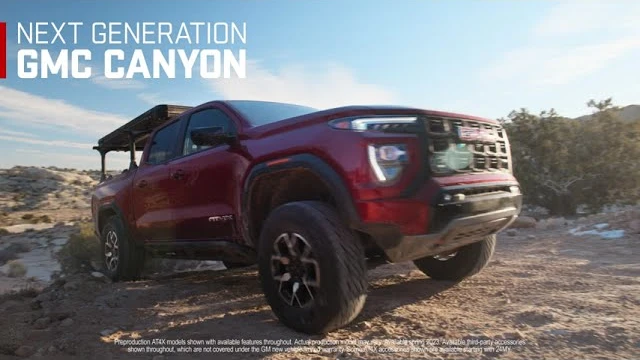
- 2027 GMC Canyon fuel economy remains unconfirmed without official EPA ratings.
- TurboMax power is expected to balance useful performance with midsize-truck efficiency.
- Towing, payload, tires, and trim will influence real-world fuel consumption.
- SLE and road-oriented setups may favor efficiency over AT4X hardware.
- Track your own MPG after delivery instead of relying only on window-sticker estimates.
2027 GMC Canyon Fuel Economy Outlook
2027 GMC Canyon fuel economy is one of the most important unanswered questions surrounding the refreshed midsize pickup. Available information points to a continued turbocharged four-cylinder TurboMax engine producing approximately 310 horsepower and 430 lb-ft of torque, with a maximum towing target near 7,700 pounds. Those figures suggest strong capability, but they do not establish an official miles-per-gallon rating.
The supplied information does not include confirmed EPA city, highway, or combined figures. Treat any precise MPG number circulating before the official fuel-economy label as an estimate rather than a finalized specification. The most useful approach is to understand which parts of the truck’s configuration are likely to affect efficiency.
Video Highlights:
- The refreshed truck is expected to retain a turbocharged four-cylinder powertrain.
- TurboMax output is described as approximately 310 horsepower and 430 lb-ft of torque.
- The lineup is expected to include SLE, AT4X, Denali, and Denali Ultimate trims.
- The redesign emphasizes updated technology, stronger styling, and improved daily comfort.
The engine’s smaller displacement may help reduce fuel use during light-duty driving, while the turbocharger provides additional power when acceleration or towing demands increase. However, turbocharged engines can consume more fuel when driven aggressively or operated under heavy load.
| Fuel Economy Factor | Likely Effect | What to Watch |
|---|---|---|
| Turbocharged four-cylinder | Potentially efficient under light load | Boost use, driving style, and gear selection |
| 310 horsepower output | Strong performance reserve | Hard acceleration can reduce MPG |
| 430 lb-ft of torque | Useful towing response | Heavy loads increase fuel consumption |
| 7,700-pound towing target | High utility for the class | Trailer weight and speed matter significantly |
| Updated body design | Possible aerodynamic improvements | Final curb weight and grille design remain important |
Do not treat estimated MPG figures as final. Confirm the official EPA city, highway, and combined ratings on the vehicle label or GMC specifications before comparing trims or calculating ownership costs.
Powertrain and Trim Efficiency Differences
The 2027 Canyon lineup is expected to use the same basic TurboMax concept across its major grades, but similar engines can produce different real-world results depending on equipment. A work-focused SLE may use less aggressive tires and fewer luxury features, while an AT4X adds off-road hardware designed for traction and durability rather than maximum highway efficiency.
Denali and Denali Ultimate models are positioned as premium alternatives. Their additional comfort equipment, larger wheels, luxury materials, and available technology may increase weight. That does not automatically make them inefficient, but buyers should expect configuration to matter more than the badge alone.
SLE
A practical entry point with a work-oriented focus. It may be the most efficiency-conscious choice if equipped with road-focused tires and a lighter configuration.
AT4X
Built for demanding trails with specialized suspension, tires, and skid protection. Its hardware can increase rolling resistance and weight.
Denali
Adds premium cabin materials, technology, and upscale styling. Efficiency depends on wheel, tire, drivetrain, and equipment choices.
Denali Ultimate
Prioritizes maximum comfort and equipment. It may appeal to long-distance drivers, but luxury additions can affect fuel consumption.
The trim comparison below is directional, not an official MPG ranking. Final ratings can change with drivetrain, wheel size, axle ratio, curb weight, and certification testing.
| Trim | Main Priority | Efficiency Consideration | Best Use |
|---|---|---|---|
| SLE | Practical utility | Potentially favorable with standard road equipment | Commuting, work, mixed driving |
| AT4X | Off-road capability | Larger tires and protective hardware may reduce MPG | Trails, rough terrain, recreation |
| Denali | Premium comfort | Added equipment may increase weight | Highway travel, daily luxury driving |
| Denali Ultimate | Maximum refinement | Heavier specification may prioritize comfort over economy | Long-distance premium use |
When comparing dealer listings, inspect the full equipment sheet instead of assuming that every Canyon with the same engine will return identical results. Wheel diameter, tire pattern, four-wheel-drive equipment, and accessories can all influence the final number.
If fuel economy is your top priority, compare tire size, wheel design, drivetrain, and curb weight before paying extra for appearance or luxury equipment.
How Towing and Payload Change MPG
The Canyon’s reported towing capability is a major strength, but towing efficiency and unloaded efficiency are separate questions. A truck pulling a trailer must move additional mass through the air and over the road. Trailer height, frontal area, cargo weight, wind, hills, and speed can all produce a noticeable fuel-economy penalty.
The TurboMax engine’s torque output should make it suitable for demanding work, but strong torque does not eliminate the energy required to move a heavy combination. Drivers should select a trailer carefully and use the correct hitch, brake setup, and load distribution.
| Driving Condition | Expected Fuel Demand | Efficiency Practice |
|---|---|---|
| Light urban driving | Moderate to high | Avoid repeated hard launches and unnecessary idling |
| Steady highway travel | Often more consistent | Maintain a reasonable speed and check tire pressure |
| Full payload | Higher than unloaded driving | Distribute cargo evenly and remove unnecessary weight |
| Trailer towing | Significantly higher | Keep trailer speed controlled and reduce aerodynamic drag |
| Off-road travel | High and variable | Use suitable tire pressures without exceeding manufacturer guidance |
Use the following process when preparing the truck for towing:
Confirm the Actual Load
Add the trailer, cargo, passengers, accessories, and hitch equipment together. Compare the combined load with the Canyon’s official towing and payload limits.
Prepare the Trailer
Check tire condition, inflation, wheel bearings, lights, brakes, and load distribution. A poorly balanced trailer can increase drag and make the truck work harder.
Plan the Route
Account for hills, traffic, weather, and fuel stops. A flatter route may take longer but can reduce repeated high-load acceleration.
Drive Smoothly
Accelerate progressively, leave extra following distance, and avoid unnecessary speed changes. Turbocharged engines generally respond best to deliberate throttle control.
Measure the Result
Record gallons added and miles traveled after each fill-up. Compare similar routes rather than judging one isolated towing trip.
For a reliable calculation, divide miles driven by gallons added. Resetting the trip computer can provide a quick reference, but pump-to-pump tracking is more useful over several tanks.
Use the same fuel grade, fill method, and calculation routine across multiple tanks. A single trip can be distorted by weather, traffic, tire pressure, or towing conditions.
Practical Ways to Improve Real-World MPG
Fuel economy is affected by more than engine design. Drivers can often improve consistency through maintenance, route planning, and equipment choices. These steps will not turn a heavy-duty towing trip into an unloaded commute, but they can reduce avoidable fuel waste.
- Keep tires inflated according to the manufacturer’s recommended cold pressure.
- Remove unused cargo, recovery equipment, and bed accessories when they are not needed.
- Avoid extended idling during warm-up, loading, or waiting.
- Use cruise control on suitable, relatively flat highways.
- Accelerate smoothly instead of repeatedly using maximum boost.
- Combine errands to reduce cold starts and short trips.
- Keep the bed and roof clear of unnecessary aerodynamic clutter.
- Follow the scheduled maintenance information in the owner’s materials.
Fuel Economy Check:
- Verify the official EPA rating for the exact configuration
- Check cold tire pressure before extended trips
- Record mileage and gallons at every fill-up
- Remove unnecessary cargo and accessories
- Compare results across similar routes and weather conditions
| Checkpoint | Why It Helps | Recommended Habit |
|---|---|---|
| Tire pressure | Reduces unnecessary rolling resistance | Inspect before long trips |
| Cargo weight | Lowers the load the engine must move | Remove unused equipment |
| Driving speed | Limits aerodynamic drag at highway speeds | Choose a steady, reasonable pace |
| Idling time | Burns fuel without adding distance | Shut down during extended waits |
| Maintenance | Supports consistent engine operation | Follow the owner’s schedule |
The refreshed Canyon is also expected to receive improved cabin technology, including the Ultify infotainment system and over-the-air updates. These features may improve convenience and trip planning, but the driver’s behavior remains the larger influence on day-to-day MPG.
Fuel-economy results vary with temperature, elevation, traffic, tire selection, drivetrain, cargo, and driving style. Compare your Canyon with similar conditions instead of another driver’s isolated number.
What to Confirm Before Buying
The reported redesign is expected to arrive in showrooms during the second half of 2026, with an estimated starting price around $40,000 and higher trims potentially exceeding $60,000. Those figures are purchase-price expectations, not fuel-economy data. Buyers should wait for the complete specification sheet before making a cost-per-mile comparison.
Ask for the exact configuration rather than a general model-year brochure. Important details include the drivetrain, wheel and tire package, final axle ratio, curb weight, towing equipment, and EPA rating. If a dealer provides an MPG number, request the source and verify whether it applies to the same configuration.
| Buyer Question | Why It Matters |
|---|---|
| What are the official city, highway, and combined ratings? | Separates certified data from estimates |
| Is this two-wheel drive or four-wheel drive? | Drivetrain can affect weight and efficiency |
| Which wheel and tire package is installed? | Tire design and size influence rolling resistance |
| What is the listed curb weight? | Heavier trucks generally require more energy |
| Is the truck equipped for towing? | Hitch and cooling hardware may change configuration |
| What is the expected delivery specification? | Pre-production information can change before sale |
The best fuel-economy choice will depend on how the truck is used. A buyer who commutes mostly on paved roads may prefer a road-focused SLE or Denali configuration. Someone who regularly travels rough trails may accept higher fuel consumption in exchange for AT4X suspension, tires, and protection. There is no single trim that fits every driving pattern.
Confirm the window sticker, official specifications, and installed equipment on the exact truck. Do not base a purchase decision on a generic 2027 Canyon estimate.
2027 GMC Canyon Fuel Economy FAQ
Q: What is the official 2027 GMC Canyon fuel economy rating?
An official EPA city, highway, and combined rating is not provided in the available information. Verify the final number on the vehicle label or GMC specifications for the exact configuration.
Q: Will the TurboMax engine be efficient?
The turbocharged four-cylinder may offer a useful balance between power and efficiency, but its real-world MPG will depend on boost use, drivetrain, weight, tires, traffic, and towing.
Q: Which Canyon trim is likely to use the least fuel?
A road-oriented SLE configuration may have an efficiency advantage if it uses lighter equipment and less aggressive tires. That is an expectation, not a confirmed EPA ranking.
Q: How much does towing affect Canyon fuel economy?
Towing generally increases fuel demand because the truck moves additional weight and aerodynamic drag. Trailer size, speed, hills, wind, and cargo distribution all influence the result.
The 2027 Canyon appears positioned as a capable midsize pickup with strong TurboMax output. Treat fuel economy as configuration-specific, verify official ratings, and measure your own results over several tanks.